
Mosquito Forceps: 5-Inch Halsted Specs
Seller-reported pattern, material, length and price for SKU MOS are separated from unresolved construction, supply and intended-use details.
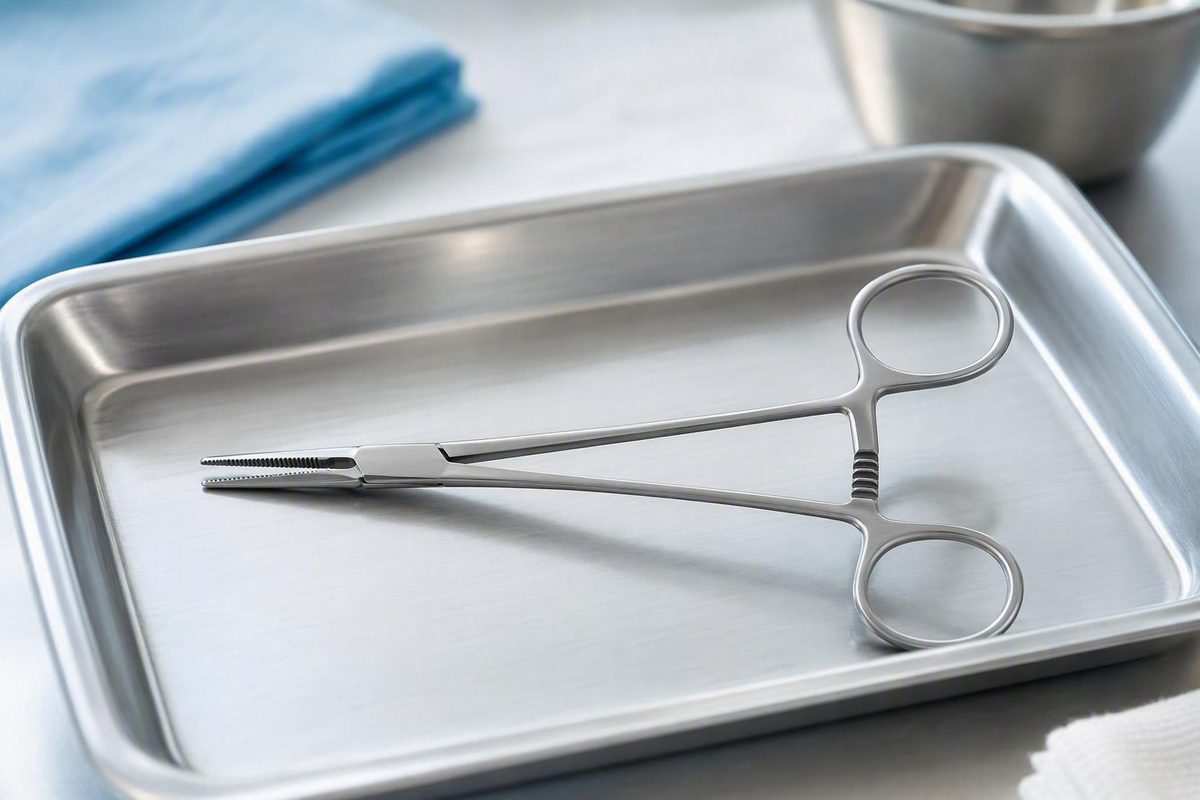
SKU MOS is listed as a curved Halsted mosquito forceps made of stainless steel. The page also states its length and price, but these remain seller-reported listing details rather than independently verified technical specifications. This is therefore a listing-specific evaluation—not a general guide to identifying mosquito forceps or distinguishing the Halsted pattern from similar instruments.
Mosquito forceps specifications at a glance
| Seller stated | Not stated |
|---|---|
| Product name: Mosquito Forceps | Sterile or nonsterile supply status |
| Pattern: curved Halsted | Reusable or disposable status |
| Length: 5 inches; observed price: $4.40 (seller listing, reviewed September 10, 2026) | Jaw-serration pattern or extent |
| Material description: stainless steel | Tip width, jaw length, or working length |
| SKU: MOS | Ratchet configuration or number of locking positions |
| Surface finish or stainless-steel grade | |
| Manufacturer or country of origin | |
| Intended use or professional or training environment | |
| Regulatory or quality information | |
| Warranty, repair options, or reprocessing instructions |
The displayed price is a dated observation, not a permanent price or a current market benchmark. Availability, promotions, shipping terms, and the final delivered cost may change.
The observed page also displayed “No reviews.” That establishes only that customer feedback was not displayed on that page when reviewed. It provides no evidence that the instrument is either good or poor quality.
What “curved Halsted mosquito forceps” does—and does not—verify
“Curved Halsted mosquito forceps” is the seller’s identification of this particular item. It gives buyers a product and pattern label, but it does not supply the construction details needed to authenticate the pattern independently or compare the model reliably with similar-looking instruments.
A pattern name is not equivalent to a dimensioned drawing, specification sheet, instructions for use, or other model-specific documentation. In this case, the name does not establish:
- How the jaws are serrated or how far the serrations extend
- The shape, width, or alignment of the tips
- The jaw length or working length
- Whether a ratchet is present
- How many locking positions are provided
- The instrument’s surface finish
- Suitability for a particular procedure or environment
Characteristics associated with other instruments bearing the same or a similar name cannot automatically be assigned to SKU MOS. The available evidence is also insufficient to explain general Halsted identification features or to distinguish this item from Kelly, Crile, or other hemostatic forceps. Making those comparisons would require authoritative pattern references and adequate model-specific details.
The same restraint applies to the material claim. “Stainless steel” is the complete supported description. It should not be expanded to “surgical-grade stainless steel,” assigned a particular alloy, or treated as evidence of corrosion resistance, passivation, durability, or compliance with a named quality standard.
For purchasing purposes, use the pattern name to organize further investigation—not as a substitute for technical documentation.
Buyer verification checklist
Request answers that apply specifically to SKU MOS. General information about mosquito forceps, stainless-steel instruments, or other Halsted models may not describe this item.
Construction
- What stainless-steel grade or alloy is used?
- What surface finish is applied?
- What are the tip width, jaw length, and working length?
- How are the jaws serrated, and how far do the serrations extend?
- Does the instrument have a ratchet?
- If so, how many locking positions does it provide?
- Are dimensioned drawings and close-up images of the jaws, tips, box lock, and ratchet available?
Photographs can help a buyer examine visible features, but they do not independently establish dimensions, material composition, or performance specifications.
Supply status
- Is the instrument supplied sterile or nonsterile?
- Is it documented as reusable or disposable?
- Is each instrument individually packaged?
- What supply-status information appears on the package label?
- If supplied sterile, where are the model-specific sterility details documented?
Do not assume supply status from the product name, price, packaging appearance, or seller category.
Intended use
- Who is the documented manufacturer?
- What intended use does the manufacturer specify?
- Is the model offered for a professional, simulation, classroom, or other environment?
- What regulatory or quality documentation, if any, applies to this exact model?
- Can the seller provide the applicable instructions for use?
The listing does not establish clinical suitability. A familiar instrument name or recognizable appearance is not enough to determine whether a product is appropriate for a particular procedure or setting.
Reprocessing
- Are model-specific cleaning, disinfection, and sterilization instructions available?
- What inspection steps are required before and after use?
- What maintenance does the manufacturer specify?
- Are any cleaning agents, temperatures, cycles, or methods prohibited?
- What criteria indicate that the instrument should be repaired or removed from service?
Commercial terms
- Is the item currently in stock?
- What is the current unit price?
- What will the total delivered cost be?
- What shipping charges and delivery estimates apply?
- What are the return terms?
- Is a warranty included?
- Are repair or replacement services available?
- What is the country of origin?
Compare alternatives only when their specifications are documented to a similar level.
How to use this reference safely
Medical Forceps describes itself as an educational, manufacturer-independent reference covering instrument types, patterns, uses, identification, cleaning, and care. It states that it does not sell instruments or accept manufacturer-paid placement and that its educational material does not replace professional training.
This article does not establish that SKU MOS is clinically suitable, approved, or appropriate for any procedure. It cannot replace the manufacturer’s instructions for use, package labeling, institutional policy, procurement requirements, or professional clinical training.
Readers may submit documented tips or corrections through the site’s contact channel.
The practical answer remains narrow: the listing supports only the seller-reported identity and specifications shown in the matrix. Before purchasing or professionally using the instrument, obtain model-specific documentation for the unresolved construction, supply, intended-use, reprocessing, manufacturer, origin, and commercial questions rather than filling those gaps with assumptions.