
The Guide Library
Mosquito Forceps: 5-Inch Halsted Specs
Seller-reported pattern, material, length and price for SKU MOS are separated from unresolved construction, supply and intended-use details.

FDA 510(k) Device Fee 2027: Cost for Instrument Buyers
See FY2027 FDA 510(k) and registration rates, compare small-business savings, and calculate the per-unit burden facing new instrument lines.

Cottonoid Patties Shortage 2026: FDA Status and Steps
Review the FDA's Q4 2026 projection, Medline endotoxin recall details, affected HBA products, and practical OR and SPD conservation measures.

Instrument Spotting After Sterilization: Water Quality Guide
Learn what white spots, rust-colored film, and dull haze suggest, which water tests to order, and when to hold, investigate, and reprocess a tray.

Huons Bupivacaine Recall: Affected Spinal Trays
Search BD tray numbers and lots, then compare B. Braun, Medline and Medical Action kit instructions for the Huons anesthetic recalls.

What Is a Fenestrated Drape and Which Specifications Matter?
A pre-cut opening defines the design, but it does not determine sterile status or intended reuse. Sheet, aperture and adhesive dimensions are separate.

Kocher Clamp: Identification, Uses and Variants
The common pattern has a ring-handled locking form with serrated jaws and terminal teeth; exact specifications require model-level verification.

5 Satinsky Clamp Questions: Function and Types
Recognize it by its side-biting vascular purpose, angled end, elongated shanks, handle and locking mechanism, not by its name or length alone.

9 Hohmann Retractor Patterns & Specs
Reviewed catalog examples span approximately 4.75 to 16 inches in overall length and about 4 to 70 mm in stated blade or tip width.

5 Deaver Retractor Facts: Uses, Sizes and Differences
A curved retractor might instead be a Harrington, a malleable ribbon retractor, or a Deaver-pattern blade made for a fixed frame.

What Is a Doyen Retractor? How Models Differ
Documented products fall into three catalog groups: general operating, abdominal and vaginal. The name alone does not identify one blade, length, handle or use.
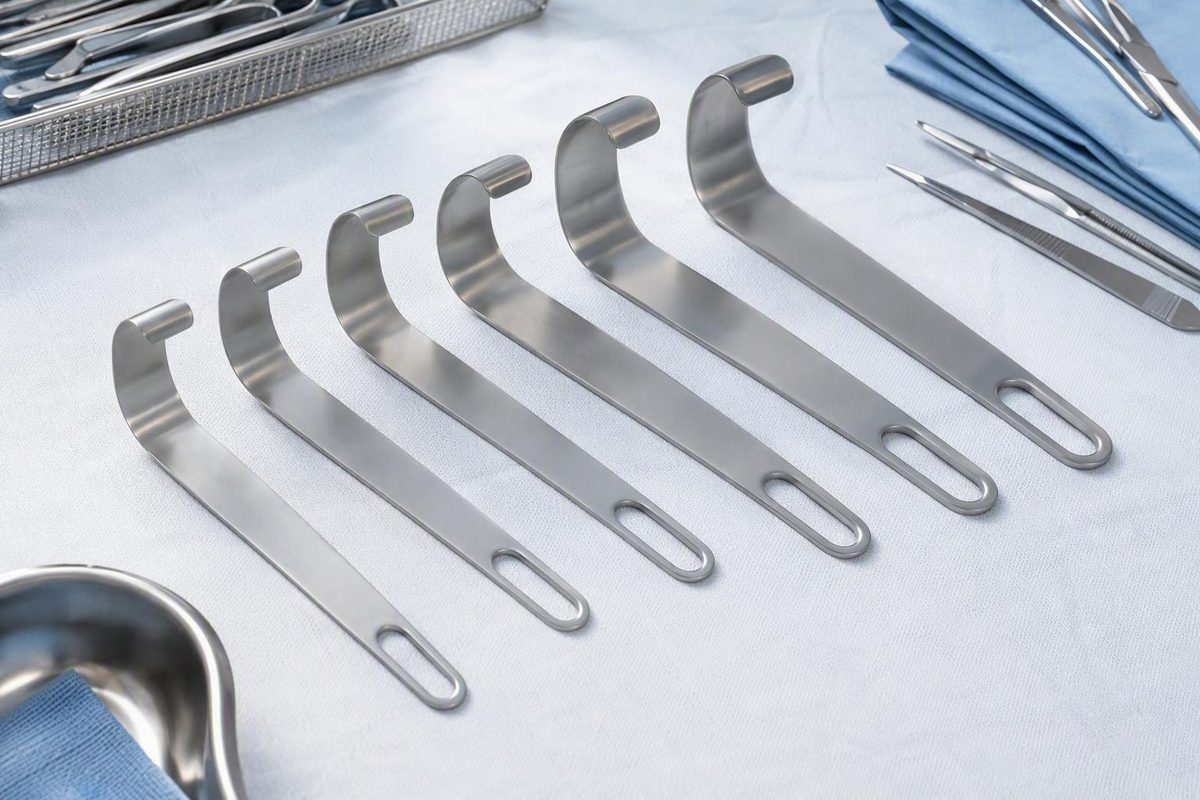
Identify and Compare Desmarres Retractors
The conventional pattern is hand-held for eyelid retention; "Size 1" can mean 12 or 13 mm. Compare exact dimensions, SKU, sterility and reuse status.
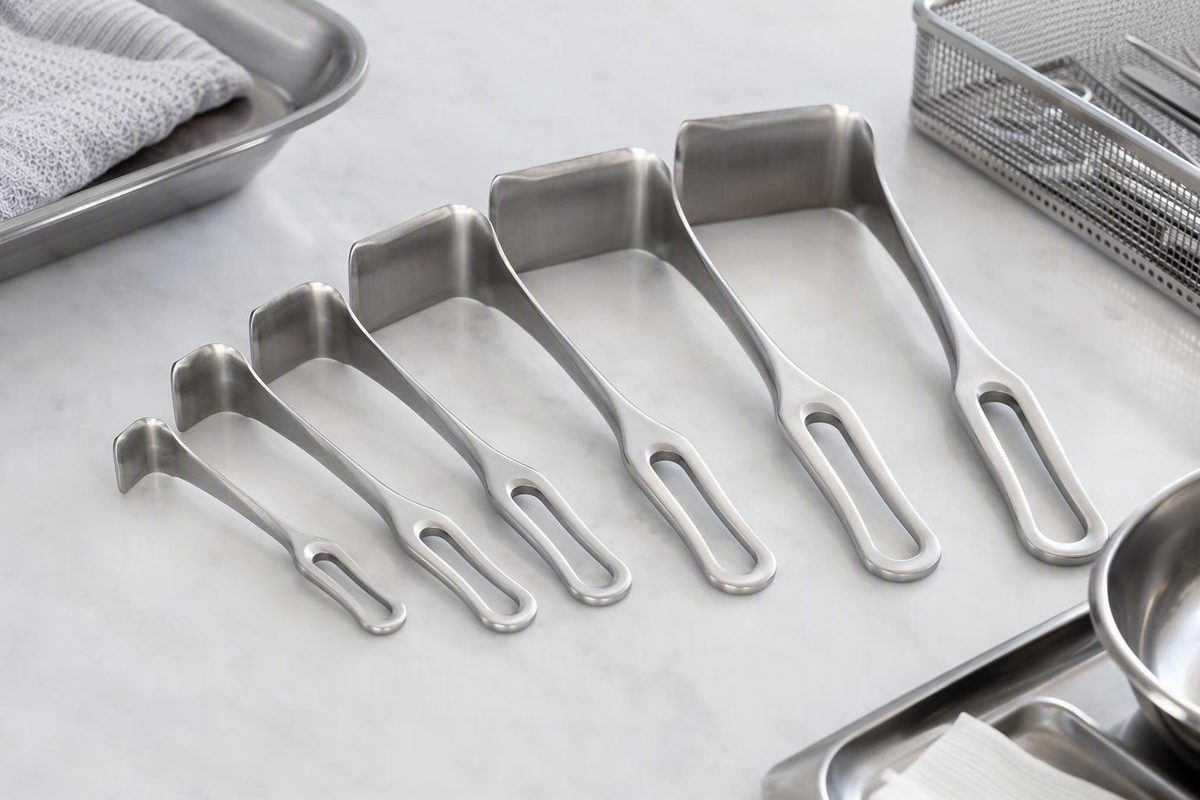
DeBakey Clamp Types and Specifications
Reliable identification starts with subtype, exact SKU, dimensions, jaw and shank geometry, material, sterility, reuse status and documentation.

Crile Forceps Share a Pattern but Vary by Model
A conventional Crile's serrations usually span the full jaw, unlike a standard Kelly's distal-half pattern. Exact model details still need checking.

Forceps and Tweezers Differ More by Design Than Name
Forceps include spring-arm thumb models without rings and hinged ring models. Some ring-handled instruments have ratchets, while others are non-locking.

Identify Cushing Forceps by Profile and Jaws
Marina 060-360 is a straight, 17 cm dressing forceps without teeth, while 060-361 is a straight, 17 cm tissue forceps with 1 × 2 teeth.

Rochester-Carmalt Forceps Vary in Size and Design
The classic pattern has longitudinal serrations with cross-texturing near the tip. Rochester-Pean is commonly described as longitudinally serrated along the jaw.

Doyen Forceps With Model-Specific Features
Final identification rests on the exact manufacturer and SKU, curvature, dimensions, jaw pattern, lock, sterility, reuse status and documentation.
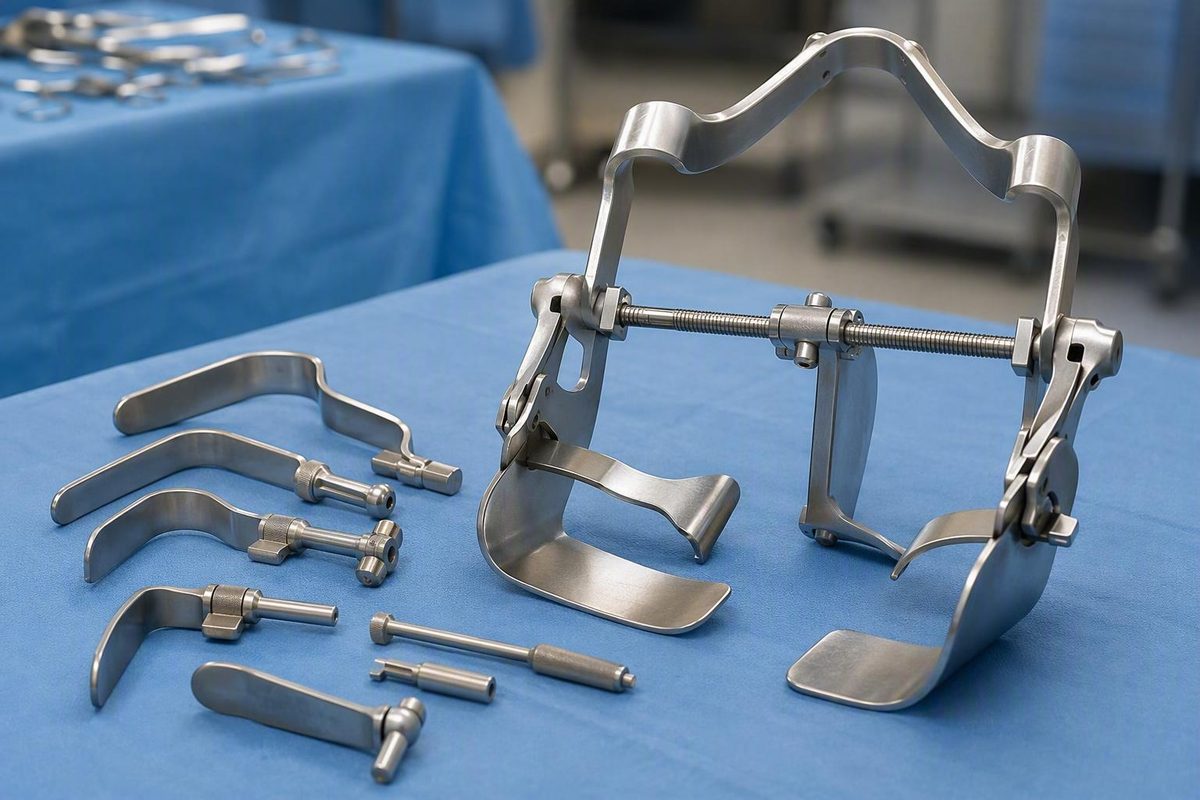
Charnley Retractor: One Name but Different Systems
Matching blade depth or the word "standard" does not prove a blade will connect or lock correctly with another frame.
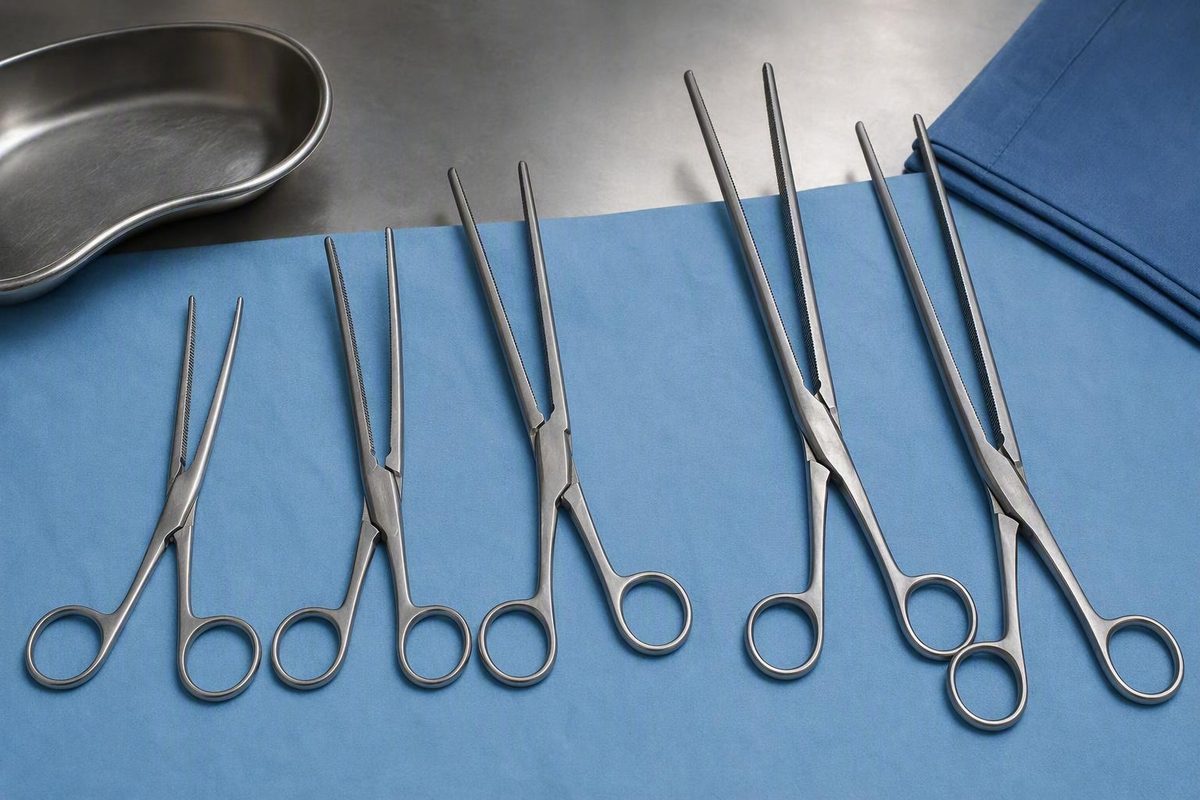
Crile vs Kelly Hemostatic Forceps: Jaw Serrations
Conventionally, Kelly has distal-half serrations and Crile has full-length serrations. Open the jaws, then verify the exact model if the label conflicts.
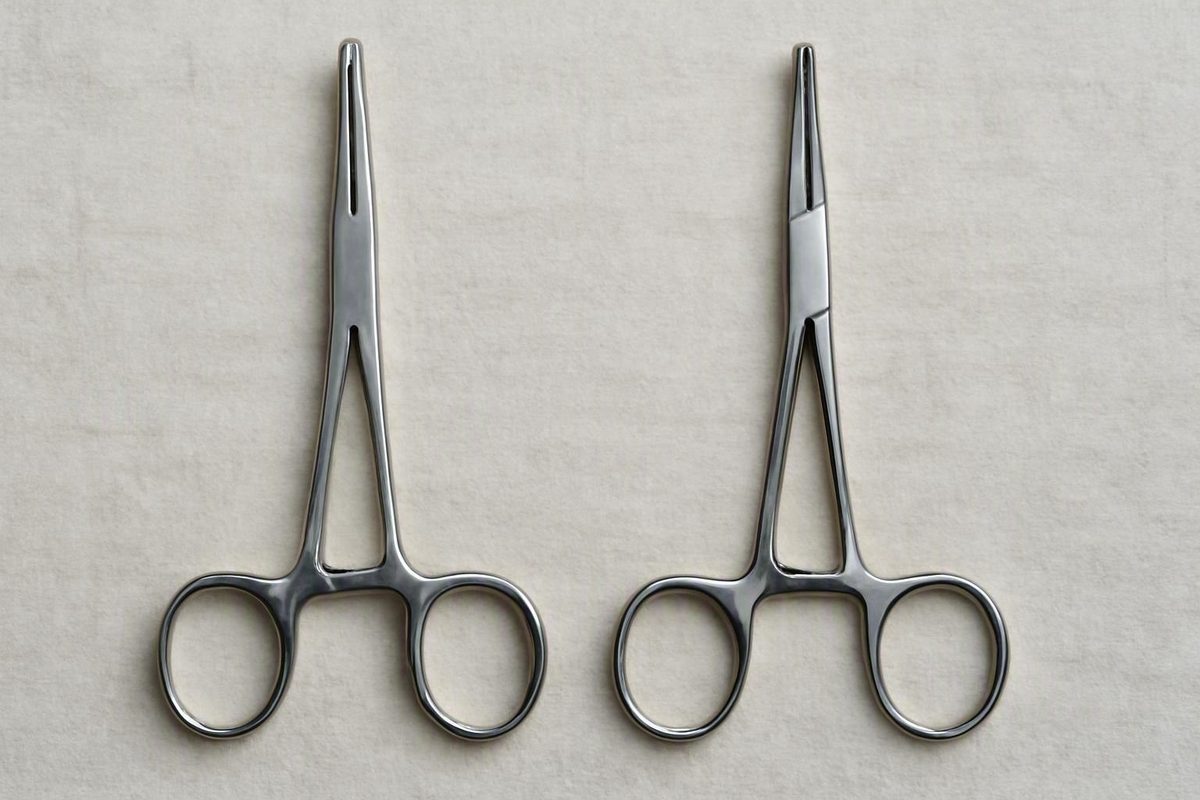
What Types of Surgical Forceps Are There?
Instrument catalogues list hundreds, but they resolve into a few families according to how they close, what the jaws carry and whether they lock.

No Guides Found.
Try a broader search or clear the topic.